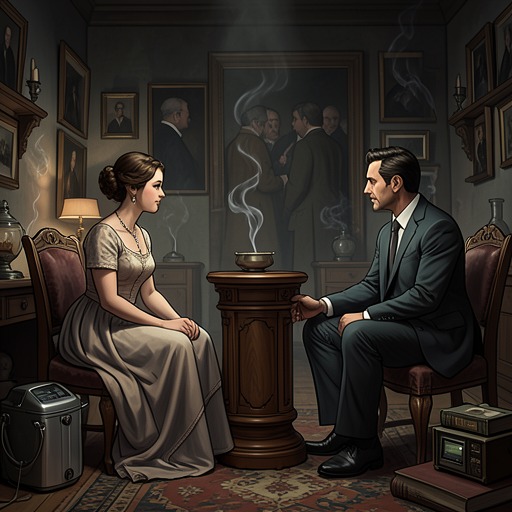
Closed doors and buried secrets
Ofrenda a la tormentaClosed doors and buried secrets frames a conflict between Amaia Salazar’s determination to investigate and Engrasi’s fear of what investigation may uncover. The metaphor makes secrecy more than an obstacle: what is hidden can return, while opening it carries risks that neither certainty nor professional purpose can erase.
Secrets That Return
Amaia rejects the idea that doors should remain closed merely because what lies beyond them may be disturbing. To her, buried secrets do not stay buried; they return repeatedly and cause lasting pain. Her image of secrets as the living dead makes concealment a continuing source of harm rather than a way to end it.
Amaia’s Duty to Investigate
Amaia connects this conviction to her identity as a police officer. She presents the work as a calling that requires her to open doors, break down walls, and fill in wells until she finds the truth. She welcomes help from Aloisius Dupree, as well as from Engrasi, because the search matters more to her than preserving the barriers around it.
Engrasi’s Warning
Engrasi challenges Amaia’s assumption that whatever lies behind a closed door will be light and truth. The alternative she raises is chaos and darkness: investigation can expose realities that do not resolve neatly into knowledge or relief. Amaia answers with a joke about piling up the chaos, setting it on fire, and using it to illuminate the darkness, turning the warning into an image of her confidence in confronting what she finds.
Engrasi does not accept the exchange as merely comic. Though her manner is tender, she insists that Amaia take the danger seriously and suggests that Dupree may reinforce the warning when he speaks with her. The concept therefore holds two positions in tension: secrecy can perpetuate suffering, but disclosure is not guaranteed to bring clarity or safety.